

White-browed Sparrow-Weaver | A Complete Birding Guide
Discover White-browed Sparrow-Weaver nests and where to find themOverview
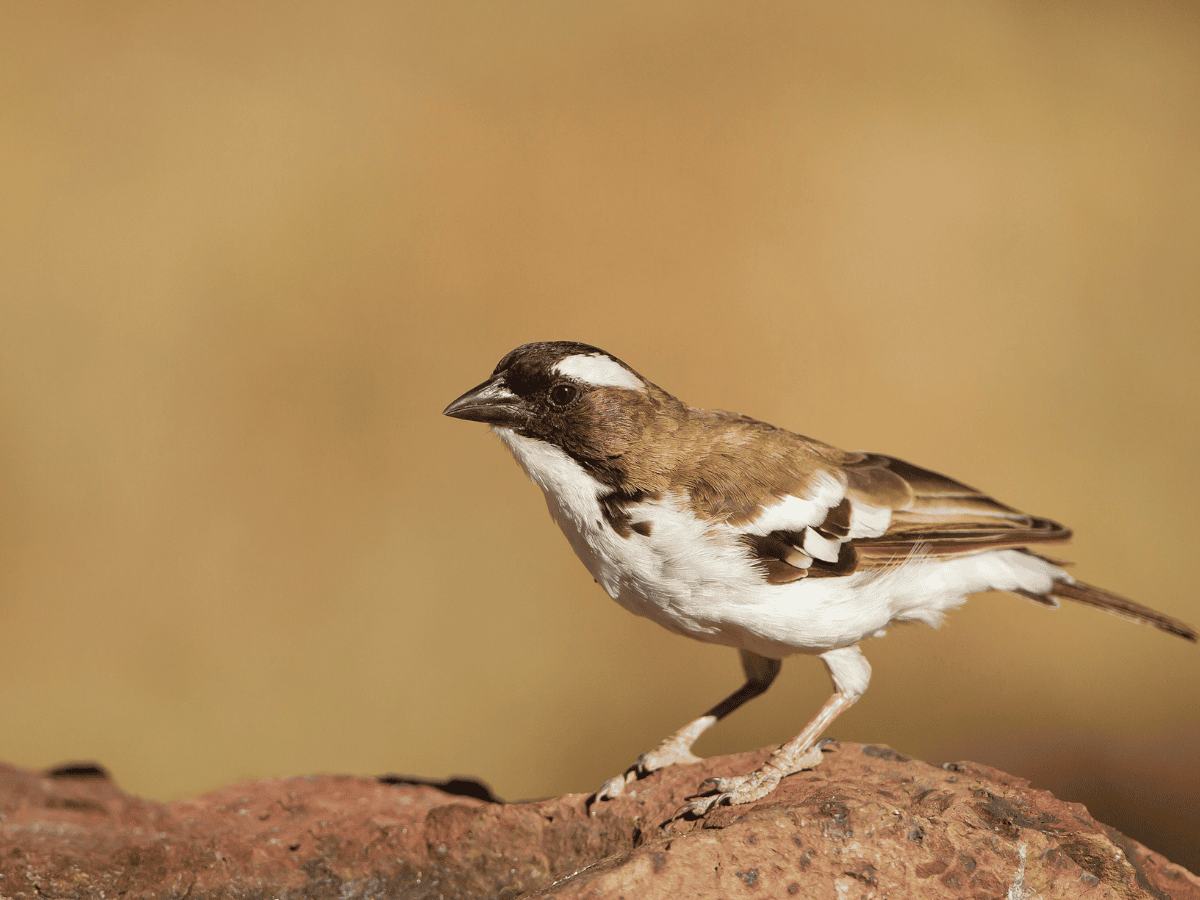
The White-browed Sparrow-Weaver is a medium-sized bird with bold black, white, and chestnut markings and a distinctive white eyebrow. It is found in savannas and open woodlands across Southern Africa. Often seen in small groups, it builds neat nests in trees and is known for its melodic calls. Its cooperative behaviour and visibility make it a rewarding species to watch.









Gallery
Summary
Best Places To See
White-browed Sparrow-Weaver is most reliably found in open savanna and woodland where scattered trees provide nesting sites and perches. Kruger National Park offers some of the most consistent sightings, particularly in areas with mixed woodland and open ground. Madikwe Game Reserve provides a strong complementary option with similar habitat and high bird density. These locations are reliable because the species is social, vocal, and often active in visible areas, making it easy to detect and observe throughout the day.
Best Time Of Year To See
White-browed Sparrow-Weaver can be seen throughout the year, with consistently high visibility across seasons. Sightings are particularly active during warmer months when breeding behaviour increases vocalisation and group activity. During wetter periods, food availability improves, supporting higher feeding rates. In cooler months, birds remain present but may be slightly less active. Because the species is social and vocal, it is easy to locate at any time, although summer offers the most dynamic viewing conditions.
Identification
White-browed Sparrow-Weaver is a medium-sized bird with dark brown to black plumage and a bold white eyebrow stripe that stands out clearly. It has a strong bill and a sturdy body. Males and females are similar, though subtle differences in size may occur. Its loud, coordinated calls are a key identifying feature. It can be confused with other sparrow-weavers, but the white eyebrow and social behaviour help distinguish it.
Behaviour
White-browed Sparrow-Weaver feeds mainly on seeds and insects, foraging on the ground in groups. It is highly social and often seen in small family groups that move together. The species is very vocal, producing loud, coordinated calls, especially during breeding season. It nests in trees using large, messy nests. Travellers are most likely to observe it feeding on the ground or calling from exposed perches.
Diet
White-browed Sparrow-Weaver feeds primarily on seeds, insects, and small invertebrates. It forages on the ground, often in groups, picking food from open areas. Feeding activity increases during warmer months when insect availability is higher. Its diet is varied and reflects its adaptability to different savanna environments.
Habitat
White-browed Sparrow-Weaver prefers open savanna and woodland with scattered trees and shrubs. It is most often found on the ground or perched in trees. This habitat provides both feeding and nesting opportunities. Travellers are most likely to encounter it in open landscapes with visible bird activity.
Conservation Status
White-browed Sparrow-Weaver is considered stable and widespread, with no major threats affecting overall populations. Its adaptability to different habitats supports its resilience. Protected areas such as Kruger National Park and Madikwe Game Reserve help maintain suitable conditions. Conservation of savanna ecosystems supports the species.
Interesting Facts
White-browed Sparrow-Weaver is known for its cooperative breeding behaviour, where group members help raise young. Its loud, coordinated calls can often be heard before the birds are seen. It builds large nests that are used repeatedly. Its social structure makes it one of the more interactive birds to observe.
Folklore
Social birds are often linked to themes of cooperation and community in African folklore. The White-browed Sparrow-Weaver, with its group behaviour, may symbolise teamwork and shared responsibility. Its loud calls reflect communication and connection. It represents the importance of social bonds in nature.