
White Rhino | A Complete Safari Guide
Learn how to identify white rhinos and where to see them on safariOverview
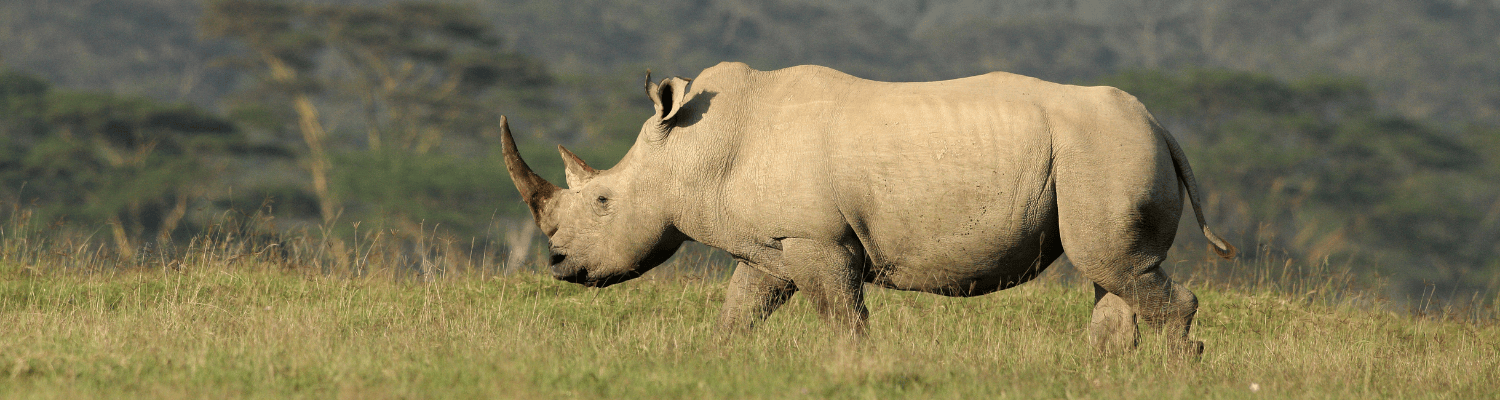
The white rhino is one of Africa’s largest and most impressive animals, known for its wide mouth, two prominent horns, and heavy, square-shaped build. It is most commonly found in southern and eastern Africa, especially in protected reserves and private concessions. Despite its size, it is generally calm and often seen grazing in open grasslands. For travellers, it is one of the most sought-after sightings and part of the iconic Big Five. Its presence reflects strong conservation efforts, making each sighting both memorable and meaningful on safari.









Gallery
Summary
Best Places To See
White rhinos are most reliably seen in well-protected reserves with open grassland habitats and strong conservation management, with Hluhluwe-iMfolozi Game Reserve in South Africa’s Zululand Region standing out as a flagship destination due to its historic role in rhino conservation and consistently high sighting rates. Kruger National Park and private reserves such as Sabi Sands Game Reserve also offer regular encounters, supported by excellent guiding and accessible terrain. In the North West Region, Madikwe Game Reserve provides strong, uncrowded sightings, while private reserves like Phinda Private Game Reserve combine low vehicle density with carefully managed populations, making sightings both frequent and high quality.
Best Time Of Year To See
The best time to see white rhino is during the dry season, when grass is shorter and visibility across open areas improves. As water becomes limited, rhinos concentrate around reliable waterholes and grazing areas, making sightings more consistent and predictable. They are most active in the early morning and late afternoon, often resting in shade during the heat of the day. In the wet season, tall grass and widespread water sources allow them to spread out, making encounters less frequent, although the scenery is greener. Peak dry months offer the most reliable viewing, but can come with higher visitor numbers in popular reserves.
Identification
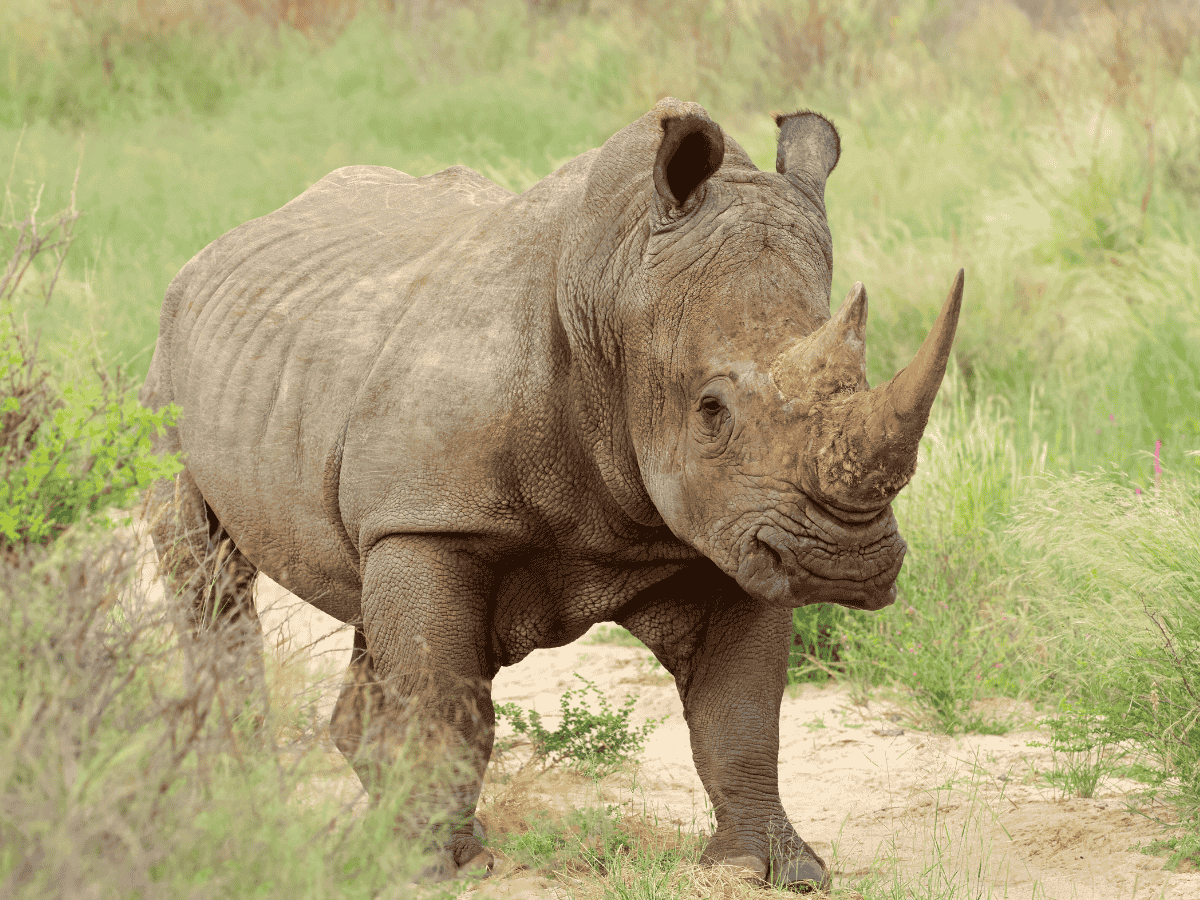
White Rhinos are large, bulky animals with a broad, square-shaped mouth designed for grazing. Their bodies are grey and heavy, with two prominent horns on the nose, the front horn being longer. They carry their heads low to the ground while feeding and often appear relaxed and social. Males are usually larger than females and may show territorial behaviour. They can be confused with black rhinos, but the white rhino’s wide, flat mouth and larger size clearly set it apart. Their calm demeanour and open grassland habitat make them easier to identify.
Behaviour
White rhinos are grazers that feed mainly on short grasses, using their wide, square lips to crop vegetation close to the ground. They are generally more social than other rhino species and are often seen in small groups, especially females with calves. Males are territorial and mark their areas with dung and urine. They are most active during cooler parts of the day and rest in shade during heat. On safari, travellers commonly see them grazing in open areas, moving slowly, or resting in groups near water.
Diet
White rhinos are grazers that feed mainly on short grasses found in open plains. Their wide mouths are perfectly shaped to crop grass close to the ground as they walk slowly and steadily while feeding. They are most active in the early morning, late afternoon, and at night. During the dry season, they may travel further to find suitable grazing areas. They depend heavily on water and often drink daily. Their grazing creates short grass lawns that benefit other herbivores and improve visibility across the landscape.
Habitat
White rhinos favour open grasslands and savanna where short grasses are abundant. Their habitat is closely linked to grazing conditions and access to water, as they need to drink regularly. They are often found near waterholes and open plains with scattered trees for shade. In the dry season, they gather in predictable areas where grass remains available. Travellers are most likely to see white rhinos in open reserves with good grass cover, especially around water sources and flat plains where they feed and rest during the day.
Interesting Facts
White rhinos are the second-largest land mammals and can weigh over two tons, yet they are surprisingly fast, reaching speeds of up to 50 km/h. Despite their name, they are not actually white—the term comes from a misinterpretation of the Afrikaans word “wyd,” meaning wide, referring to their broad mouth. They are grazers, using their wide lips to crop grass. White rhinos are generally more social than black rhinos and are often seen in small groups.
Conservation Status
White rhinos are currently listed as near threatened, but their future remains uncertain due to ongoing poaching pressure. The main threat is illegal hunting for their horns, driven by demand in international markets. Habitat loss and fragmentation also impact their long-term survival. Despite this, strong populations exist in well-managed reserves, particularly in southern Africa. Intensive protection measures, including anti-poaching units and monitoring, have helped stabilise numbers in key areas. Private reserves and national parks play a critical role, and safari tourism provides funding and incentives to protect white rhinos and maintain their habitats.
Folklore
White rhinos are often viewed as symbols of endurance, stability, and quiet strength. In parts of southern Africa, their grounded nature connects them to the earth, representing balance and resilience. Some communities see rhinos as protectors of the land, their presence suggesting harmony between wildlife and people. Their ancient appearance has led to associations with longevity and survival, reinforcing respect for nature’s persistence and the importance of safeguarding species that have endured for generations.